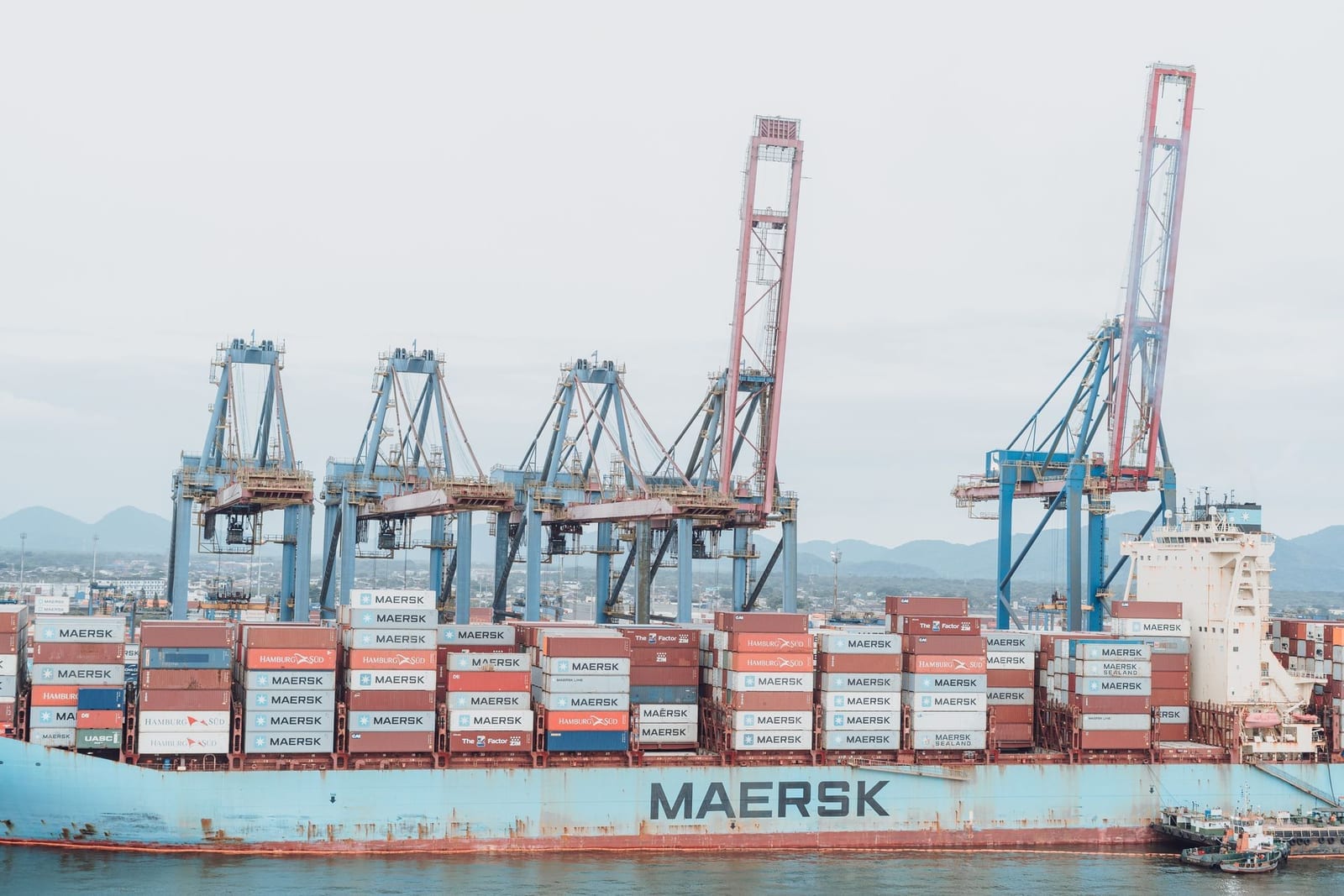

Every consignment that lands at Karachi Port, Port Qasim or Jinnah International Airport is cleared on paper before it is cleared in the yard. Pakistan Customs assesses a Goods Declaration filed through WeBOC and the Pakistan Single Window, and that declaration is only as strong as the documents attached to it. Knowing exactly which customs clearance documents Pakistan requires, and having them ready before the vessel sails, is the single biggest factor separating a same-week release from a container that sits at the terminal collecting storage and demurrage.
This checklist sets out the documents required for customs clearance in Pakistan for both imports and exports, what each document has to show, the extra paperwork that regulated goods attract, and the documentation mistakes that hold up assessment most often. It is written for traders clearing through Karachi, where most of Pakistan's containerised cargo arrives, but the requirements apply nationally because the filing system is national.
What Documents Are Required for Customs Clearance in Pakistan?
Pakistan customs documents fall into four groups, and customs reads them together rather than one at a time. Commercial documents establish what was bought and for how much. Transport documents prove how the goods travelled and who is entitled to collect them. Registration documents prove who the importer or exporter is. Regulatory documents prove the goods are allowed into or out of the country under the conditions attached to them.
- Commercial documents: commercial invoice, packing list, sales contract or proforma invoice
- Transport documents: bill of lading for sea freight or airway bill for air freight, plus the carrier's arrival notice and delivery order
- Registration and identity documents: National Tax Number (NTN), Sales Tax Registration Number (STRN), CNIC of the proprietor or directors, WeBOC user ID and PSW subscription, chamber of commerce membership
- Regulatory documents: import or export permits, licences, certificates of origin, product certificates and no-objection certificates tied to the goods
The Federal Board of Revenue describes WeBOC as the system for automated import and export clearance, and the Pakistan Single Window now sits in front of it as the trader's single point of filing. In practice that means most customs documentation Pakistan requires is uploaded as scanned attachments to the Goods Declaration rather than handed across a counter. Originals still matter. The shipping line wants the original bill of lading or a telex release before it issues a delivery order, the bank wants originals for the payment leg, and customs can call for any original during examination.
Import Customs Clearance Documents
These are the import clearance documents Pakistan customs expects on every commercial consignment. Treat the list as the baseline. Product-specific requirements, covered further down, are added on top of it rather than replacing any part of it.
- Commercial invoice: issued by the supplier and showing the seller's and buyer's full names and addresses, invoice number and date, a complete description of each item, quantity, unit price, currency, total value, delivery term and country of origin. The description drives the tariff classification and the value drives assessment, so vague wording such as spare parts or general goods invites queries
- Packing list: the number of cartons, pallets or crates, gross and net weight of each, dimensions, and the shipping marks and numbers that appear on the packages. Customs uses it to plan an examination and to reconcile the physical cargo against the declaration
- Bill of lading or airway bill: issued by the carrier or its agent after loading. The consignee and notify party must match the importer's registered name exactly as it appears on the NTN certificate, because a mismatch between the transport document and the WeBOC profile stops the delivery order and the declaration
- Certificate of origin: issued by the chamber of commerce or designated authority in the exporting country. It is mandatory when claiming a preferential duty rate under a trade agreement, such as the China-Pakistan Free Trade Agreement or SAFTA, and it is checked where origin decides admissibility or the application of anti-dumping duty
- Letter of credit or bank contract: the letter of credit, contract or proforma invoice registered with the importer's bank. Since the Pakistan Single Window introduced the Electronic Import Form, the financial instrument is created by the bank on PSW and its number is quoted on the Goods Declaration, linking the goods to the payment channel
- Insurance certificate: showing the insured value and the parties. Pakistan assesses duty on a cost, insurance and freight basis under Section 25 of the Customs Act 1969, so where goods are bought on FOB or CFR terms customs needs the actual insurance figure or applies a notional one
- NTN, STRN and registration documents: the importer's National Tax Number, sales tax registration where the business is registered, the CNIC of the individual or directors, an active WeBOC user ID and PSW subscription, and chamber of commerce membership. Unregistered or inactive taxpayers pay a higher withholding rate at import and cannot claim input tax
- Import permits where applicable: any permit, licence, registration or no-objection certificate that the Import Policy Order or the relevant regulator requires for the product before it can be released
Export Customs Clearance Documents
Export customs documents Pakistan requires mirror the import set, with the financial leg pointing the other way. The exporter must show what is leaving, who is buying it, and which bank will receive the proceeds, because export clearance in Pakistan is tied to foreign exchange realisation as well as to revenue. The full process, including Goods Declaration filing and port procedures, is covered in our guide to export customs clearance in Pakistan.
- Commercial invoice and packing list prepared by the exporter, consistent with the sales contract or letter of credit
- Export Goods Declaration filed on WeBOC under Section 131 of the Customs Act 1969
- Electronic export form (the financial instrument created by the exporter's bank on PSW) linking the shipment to the expected foreign exchange receipt
- Bill of lading or airway bill issued after shipment, plus the shipping line's booking confirmation before it
- Certificate of origin for the destination market, issued by the chamber of commerce, or a registered exporter origin statement for EU GSP+ shipments
- Product-specific certificates such as a phytosanitary certificate from the Department of Plant Protection, a health certificate for food, a fumigation certificate, or a halal certificate for meat products
- Letter of credit or contract, and any pre-shipment inspection certificate the buyer or destination requires
- Supporting documents for duty drawback or Export Facilitation Scheme claims where the exporter relies on either scheme
Documents Required for WeBOC Goods Declaration
The Goods Declaration is the legal declaration under Section 79 of the Customs Act 1969 for imports and Section 131 for exports. It is filed electronically on WeBOC by the importer or a licensed customs agent using a registered user ID, and the WeBOC documents for customs clearance are the attachments and reference numbers the declaration cannot be completed without. Understanding how the platform processes a declaration helps here, and our explainer on WeBOC customs clearance Pakistan walks through the system end to end.
- The Import General Manifest number and index number reported by the carrier, which identify your consignment within the vessel's manifest
- Commercial invoice and packing list, uploaded as attachments and keyed into the line items of the declaration
- Bill of lading or airway bill number, container numbers and seal numbers
- The Electronic Import Form or export form number issued by the bank on PSW
- The correct Pakistan Customs Tariff code for every line item, along with the declared value, currency, exchange rate, freight and insurance
- Country of origin and the certificate of origin number where a preferential rate is claimed
- Licence, permit or registration numbers issued by the relevant regulator, and the reference of any exemption notification being claimed
Two of these deserve extra care. The tariff code decides the duty rate, whether regulatory duty applies, and which regulatory conditions attach, so getting HS code classification Pakistan right before filing avoids both overpayment and a later recovery notice. The declared value is compared against valuation rulings and the customs database, and the invoice, contract and bank instrument are what defend it when it is questioned.
WeBOC registration itself is a document exercise. A new importer or exporter applies with the NTN and STRN certificates, CNIC, a bank account maintenance certificate, chamber of commerce membership, proof of business premises and a signed undertaking, and completes biometric verification at the Customs House. Sort this out weeks before the first shipment, not when the container is already on the water.
Additional Documents for Restricted or Regulated Goods
The general set above clears unrestricted commercial goods. A large share of Pakistan's imports are regulated in some way, and the Import Policy Order lists the conditions attached to each category. Product-specific documents are additional to the general set and they must be valid on the date of filing, not obtained afterwards.
- Pharmaceuticals, medical devices and cosmetics: import licence and product registration or a no-objection certificate from the Drug Regulatory Authority of Pakistan (DRAP), and for raw materials the registration of the manufacturer that will use them
- Seeds, plants and plant products: import permit and phytosanitary requirements set by the Department of Plant Protection, with a phytosanitary certificate from the exporting country and fumigation evidence where required
- Food products: health certificates, halal certification for meat and poultry, and where applicable clearance from the Animal Quarantine Department and conformity with PSQCA standards
- Telecom and wireless equipment: type approval or a certificate of compliance from the Pakistan Telecommunication Authority (PTA) for the exact model imported
- Chemicals and hazardous materials: material safety data sheets, no-objection certificates from the Ministry of Climate Change for ozone-depleting substances, and environmental clearances where the goods fall under the Basel Convention
- Used and second-hand machinery: a pre-shipment inspection certificate confirming age, condition and residual life as required under the Import Policy Order
- Goods under trade remedies: origin evidence and, where an anti-dumping investigation applies, the documentation the National Tariff Commission's notification requires
The distinction between general and product-specific requirements matters commercially. General documents are the same for every consignment and can be standardised. Product-specific documents depend on the exact tariff heading, the regulator involved and sometimes the intended use, and they are where most first-time importers are caught out.
Common Documentation Mistakes That Delay Customs Clearance
Across the consignments our team clears at Karachi, the same handful of documentation errors accounts for most delays. None of them is exotic. All of them are avoidable with a pre-shipment check.
- The invoice, packing list and bill of lading describe the goods differently or show different quantities, which triggers a physical examination
- The consignee name on the bill of lading does not match the name registered against the NTN, so the delivery order and the declaration both stall
- No Electronic Import Form was opened before shipment, leaving the Goods Declaration without a financial instrument to reference
- The tariff code on the declaration does not match the description on the invoice, prompting reclassification, reassessment and sometimes a penalty
- A preferential rate is claimed without a valid certificate of origin, so the concession is refused and the full customs duty and taxes in Pakistan become payable
- Regulatory permits are applied for after arrival rather than before, so the cargo waits at the terminal while the regulator processes the application
- Permits or registrations have expired or cover a different model, batch or manufacturer than the goods actually shipped
- The declaration is filed late after the Import General Manifest is lodged, pushing the consignment past the free days offered by the terminal
Customs Clearance Document Checklist for Pakistani Importers
Use this customs clearance checklist Pakistan importers can run through at three points in the shipment. The first block is completed before the supplier ships, the second while the goods are in transit, and the third at arrival. Our guide to import clearance in Pakistan explains the sequence each block feeds into.
- Before shipment: NTN, STRN, WeBOC ID and PSW subscription active; Electronic Import Form opened by the bank; tariff code confirmed; regulatory permits, licences or registrations obtained; certificate of origin requested from the supplier where a preferential rate applies
- In transit: commercial invoice, packing list and bill of lading or airway bill received and cross-checked for consistency; insurance certificate on file; original bill of lading couriered or telex release confirmed; Import General Manifest index number obtained from the carrier
- At arrival: Goods Declaration filed on WeBOC with all attachments; duty and taxes paid against the payment slip ID; delivery order collected from the shipping line; examination attended where the consignment is selected; gate pass and transport arranged before free days expire
Keep a copy of the complete file, including the assessed Goods Declaration and the payment receipts, for at least five years. Post-clearance audit, refund claims and valuation disputes all depend on being able to produce the file long after the container has been delivered. A more detailed reference version of this list is available in our customs clearance checklist Pakistan guide.
How a Customs Clearing Agent Helps Verify Your Documents
A licensed customs clearing agent earns their fee before the declaration is filed, not after. The agent checks the document set against the tariff heading and the Import Policy Order, confirms the classification and the likely valuation treatment, flags any permit that is missing or expiring, and makes sure the bank instrument and the transport document reconcile with the invoice. Where a query or an examination follows, the agent represents the importer at the Customs House with a file that has already been prepared to answer it.
For importers bringing in regulated goods, an experienced agent also knows the regulators. DRAP, the Department of Plant Protection, PTA and the Customs Valuation directorate each have their own document formats and processing rhythms, and an agent who deals with them weekly saves the days that a first application usually loses. Arshad Sualeh Corporation has provided licensed customs clearance services at Karachi since 1988 and pre-checks every document set before it reaches WeBOC.
The rule of thumb is simple. If a document will be needed at any stage of clearance, it should exist and be verified before the goods leave the supplier's premises. Everything in this checklist is easier to fix at origin than at the terminal.
Reviewed by Customs Clearance Specialist
ASC Customs Clearance Desk
Licensed customs clearing agents, Arshad Sualeh Corporation, Karachi
The desk clears import and export consignments on WeBOC and the Pakistan Single Window at Karachi Port, Port Qasim and Jinnah International Airport every working day, including DRAP, plant quarantine, PTA and industrial machinery consignments, and has done so since 1988. This checklist reflects the document sets the desk prepares and verifies for clients and the errors it most often corrects before filing.
- Last updated
- 10 September 2026
- Review date
- 10 September 2026
Source references
- customs clearance documents Pakistan
- import documents Pakistan
- WeBOC documents
- customs clearance checklist
- Karachi customs