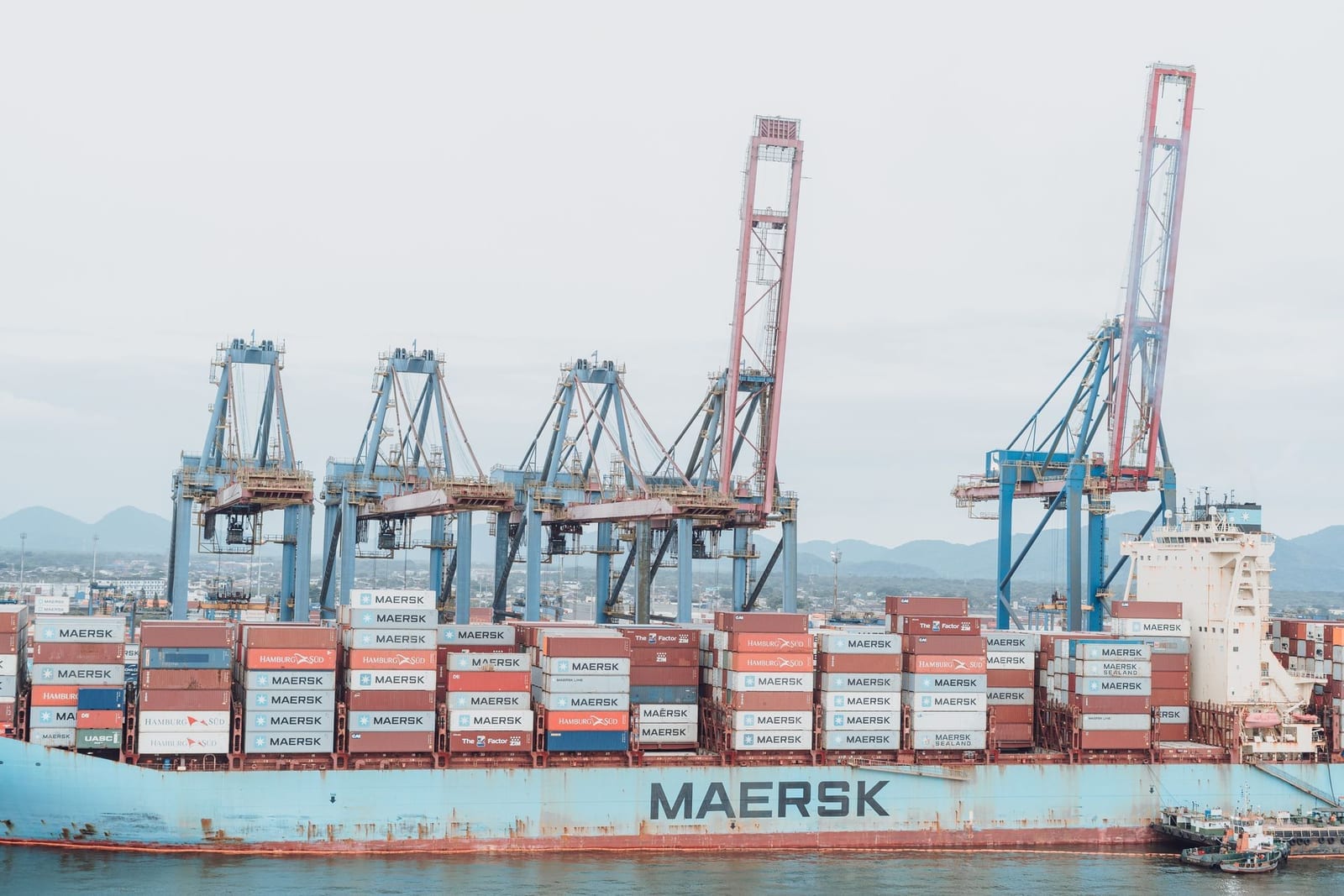
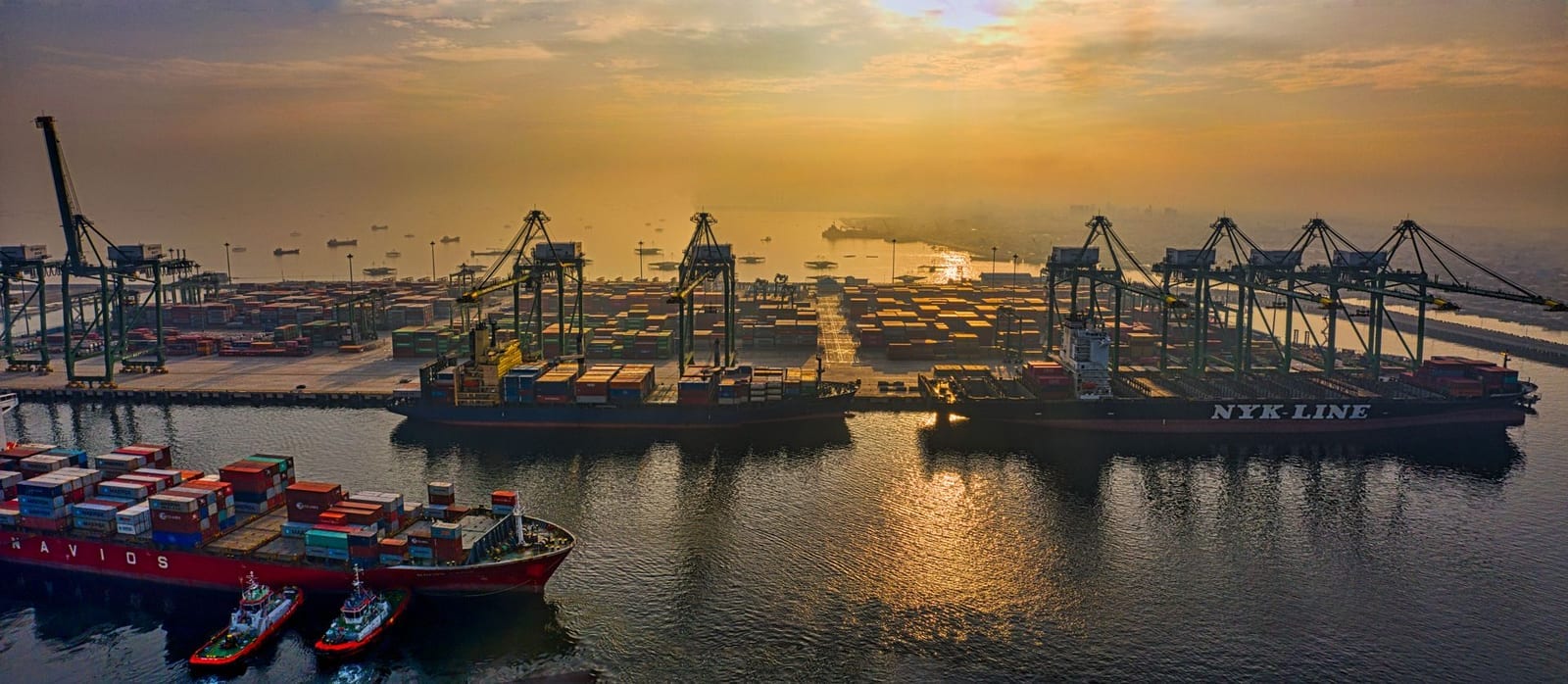
Pakistan's containerised trade runs overwhelmingly through two facilities on the Sindh coast: Karachi Port and Port Qasim. They are about 35 kilometres apart, they serve overlapping but distinct roles, and the choice between them has practical consequences for transit time, inland transport and handling cost. This article sets out how they differ and how the choice is actually made.
Karachi Port
Karachi Port is the older and more central of the two, sitting close to the city and to a dense concentration of importers, consolidators and clearing agents. Its container business is handled across several terminal operators, and its proximity to the commercial centre is its defining commercial advantage: shorter drayage to most Karachi consignees, and a deep local ecosystem of transporters, warehouses and agents.
That centrality is also its constraint. Urban location limits physical expansion, and access roads run through city traffic, which matters more for time-sensitive cargo than the shipping schedule does.
Port Qasim
Port Qasim lies to the east, on a channel off the coast, and was developed with more land around it. It handles a substantial share of containerised traffic alongside bulk and industrial cargo, and it serves the industrial zones on that side of the city particularly well. For consignees located near it, the inland leg is materially shorter than it would be from Karachi Port.
Its channel approach introduces its own considerations around vessel movement, and its distance from the city centre cuts both ways: less urban congestion, but longer drayage to consignees on the western side.
How the choice is actually made
Importers rarely choose a port directly. In practice the port is chosen by the shipping line's service, and the shipping line is chosen by the freight rate, the sailing schedule and the origin. The importer's real decision is which service to book, and the port of discharge is a consequence of it.
That said, the consequence is worth pricing. Where two services are otherwise comparable, discharge at the port nearer your final destination saves inland cost and time on every consignment, and over a year of regular volume that is not a trivial difference.
- Where is the cargo actually going? Drayage distance is the most consistent differentiator.
- What service does your preferred carrier run, and how frequently?
- Is the cargo containerised, break-bulk or bulk? Facilities differ by cargo type.
- Does the consignment need specialised handling, such as reefer plug-in points or heavy lift?
- What is the realistic road access on the day, at the hour your transport will run?
What does not differ
It is worth being clear about what the choice does not change. Customs procedure is the same: the same declaration, the same tariff, the same assessment and selectivity, the same regulatory approvals for regulated cargo. Duty does not vary by port. The documentary requirements do not vary by port.
Neither does the fundamental economics of time. Free days, demurrage and detention operate at both, and a consignment that stalls at one would have stalled at the other. Choosing a port does not solve a preparation problem.
Transshipment and regional traffic
Both ports also handle transshipment, where cargo is discharged and reloaded rather than entering Pakistan. That side of the business has become more prominent as carriers have adjusted regional routings, and it affects importers indirectly: a facility handling more transshipment volume is a busier facility, and terminal congestion is felt by every box on the yard regardless of why it is there.
It is one of several reasons why a realistic clearance plan allows for variability rather than assuming a best-case turnaround. Port conditions are a shared environment, and they move for reasons that have nothing to do with your consignment.
Practical guidance
For most importers the sensible approach is to let the service and rate drive the booking, but to know what each option implies for the inland leg before agreeing it — and to say so to your forwarder, because a discharge port that adds two hours of drayage to every container is a cost that never appears on the freight quote.
For heavy, oversized or project cargo the calculus changes, because handling capability rather than proximity becomes the constraint. Those movements should be planned around the facility that can actually work the cargo, with the route to site surveyed before the vessel is booked.
Terminal operators, and why they matter more than the port
Asking which port is better is often the wrong question. Within each facility, container traffic is worked by different terminal operators, and your experience on the ground is shaped by the terminal your vessel berths at rather than by the port name on the paperwork. Terminals differ in equipment, yard capacity, gate throughput and how they handle specialised cargo, and those differences show up as turnaround time.
It is worth knowing which terminal your regular services use and what that implies. A carrier switching terminals within the same port can change your drayage routing, your gate procedure and your realistic collection window, without anything on your booking looking different.
Planning around variability
Both facilities experience periods of pressure — seasonal import peaks, vessel bunching after weather delays, or shifts in regional routing that put more boxes on the yard than usual. None of this is predictable at the point you book, which argues for building slack into the plan rather than assuming the best case.
The practical form that takes is simple: know your free-day expiry, have the documentary file complete before arrival, and have transport arranged provisionally rather than reactively. Congestion punishes the unprepared consignment far more than the prepared one, because the prepared one is already moving when the pressure hits.
In short: let the carrier service and rate drive the booking, but know before you agree it what the discharge port implies for the inland leg, the terminal your box will actually be worked at, and the realistic collection window from that gate.
ASC Freight clears at both facilities and arranges the onward road freight leg, so the discharge port can be chosen on total delivered cost rather than on freight rate alone. See our sea freight service for booking and coordination.
- Karachi Port
- Port Qasim
- terminals
- port clearance