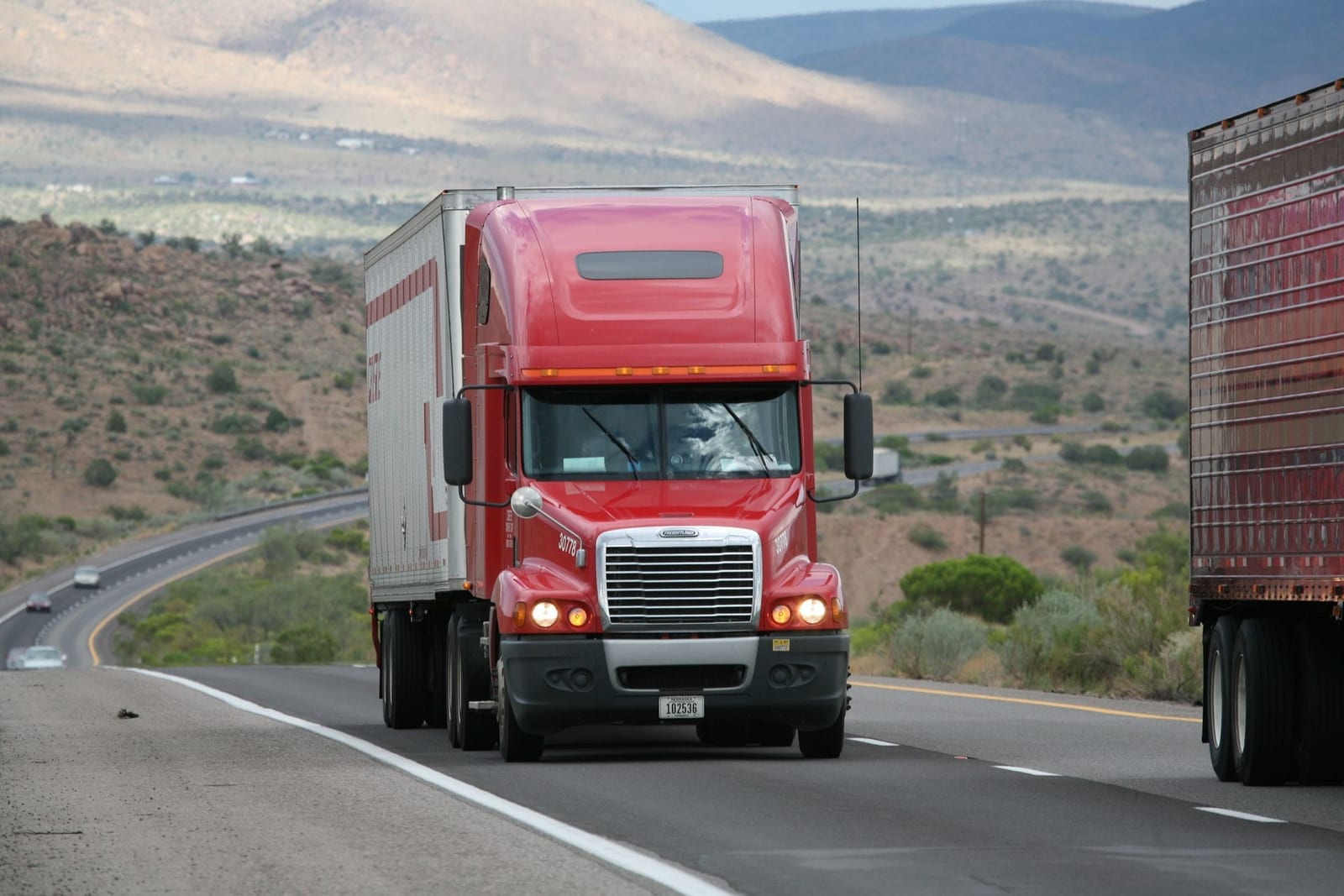
Clearance ends when customs releases the cargo. Delivery ends when it reaches your premises, and the distance between those two points is where a surprising share of import cost and risk actually sits. Pakistan's inland leg runs from Karachi to consignees spread across more than a thousand kilometres of the country, and how it is organised determines both what you pay and how often something goes wrong.
The two ways cargo leaves the port
There is a genuine choice at the terminal gate, and it is worth making deliberately rather than by default.
- Move the container. The sealed box is lifted onto a trailer and hauled to your premises, unloaded there, and the empty returned to the nominated depot.
- Destuff at the port. The container is unpacked inside or near the terminal, the cargo transferred to a conventional truck, and the empty handed straight back.
Moving the container keeps the cargo sealed from origin to your door, which reduces handling and pilferage exposure and suits full loads. It also keeps the shipping line's detention clock running until the empty is returned, so unloading speed at your end becomes a direct cost.
Destuffing stops detention almost immediately and can be cheaper for cargo going to multiple destinations or to premises a trailer cannot reach. The trade-off is an extra handling operation, performed by people you do not employ, on cargo you cannot watch.
The main corridors
Most import volume moves north from Karachi. The Punjab corridor to Lahore and onward to the industrial belt around Gujranwala and Sialkot carries the bulk of it, with Faisalabad drawing heavy textile-related traffic. The route to Islamabad and Rawalpindi extends further north, and there are long-haul runs west to Quetta and north-west to Peshawar.
Transit times on these corridors vary with vehicle type, load, road conditions, weather and the driver-hour realities of long-distance haulage. Any figure quoted as a fixed duration should be treated as an average rather than a commitment, and planning should allow for the difference.
Matching the vehicle to the cargo
Vehicle selection is not only about capacity. Container traffic needs a trailer with the right chassis; loose cargo can move on conventional trucks; oversized or heavy pieces need low-bed equipment and, in many cases, a route survey before the movement is confirmed.
For oversized and overweight loads the constraint is rarely the truck. It is the route: bridge limits, overhead clearances, turning radii at junctions, and the permissions required to move an abnormal load. Establishing that the cargo can physically reach the site should happen before the vessel is booked, not after the container is on the ground.
Temperature-controlled movement
Reefer cargo introduces a different set of risks on the inland leg, because the cold chain is only as good as its weakest hour. The vulnerable moments are the handover from the terminal plug point to the truck, and any waiting time at either end with the unit not running.
For pharmaceuticals, food and other temperature-sensitive goods, the practical requirements are a unit in verified working order, a temperature record for the journey, and a receiving point that can accept the delivery immediately rather than leaving it waiting at the gate. This connects directly to cold chain logistics, which covers the wider chain.
Documentation on the road
The inland leg has its own paperwork, and it matters when something goes wrong. The consignment note issued by the transporter records what was handed over, in what condition and how many pieces. Proof of delivery, signed at the receiving end, closes the loop.
Where cargo arrives short or damaged, these documents are the entire basis of a claim. A delivery accepted without checking piece count and visible condition, and signed clean, is very difficult to claim on afterwards — regardless of what actually happened in transit.
Bonded movement to an inland dry port
Not all cargo has to clear at the seaport. Uncleared goods can be moved under bond to an inland facility and cleared there, which suits upcountry importers who would otherwise pay Karachi storage while arranging clearance remotely.
The trade-off is an extra movement and a different set of procedures, so it is not automatically cheaper. Where it pays is when the consignee is far from Karachi, the cargo is not urgent, and the alternative is a container sitting at the terminal while paperwork travels.
Controlling the cost
- Book transport against the expected release date rather than after release
- Decide container-versus-destuff before the box is ready, not on the day
- Confirm your site can actually receive the vehicle: access, unloading equipment, working hours
- Return empties promptly — detention after delivery is pure avoidable cost
- For repeat lanes, negotiate rates on annual volume rather than per movement
- Check piece count and condition at delivery before signing
Insurance on the inland leg
Marine cargo policies do not always extend to the full inland journey, and the gap tends to be discovered at the point of a claim. Where cover is written port to port, the road leg from terminal to warehouse may fall outside it entirely, and the transporter's own liability is generally limited by contract to a figure well below the value of most import consignments.
Check what your policy actually covers and to what point. Where cover ends at the port, extending it to final destination is normally inexpensive relative to the exposure, and considerably cheaper than discovering the shortfall after a loss.
The other half is evidence. A claim is built on documents: the consignment note describing what was handed over, photographs of condition at loading and unloading, and a clean or claused proof of delivery. A delivery signed clean, without checking, closes off most of the argument before it starts — so the receiving process at your own premises matters as much as the transport contract.
ASC Freight coordinates the inland leg with clearance through its road freight service, so the vehicle is arranged against the actual release rather than after the container has started accruing charges. Delivery coverage across the country is set out under locations.
- road freight
- trucking
- port to door
- inland transport